Blog post
All in on AI: “Discovery to Influence in GEO” Part 2
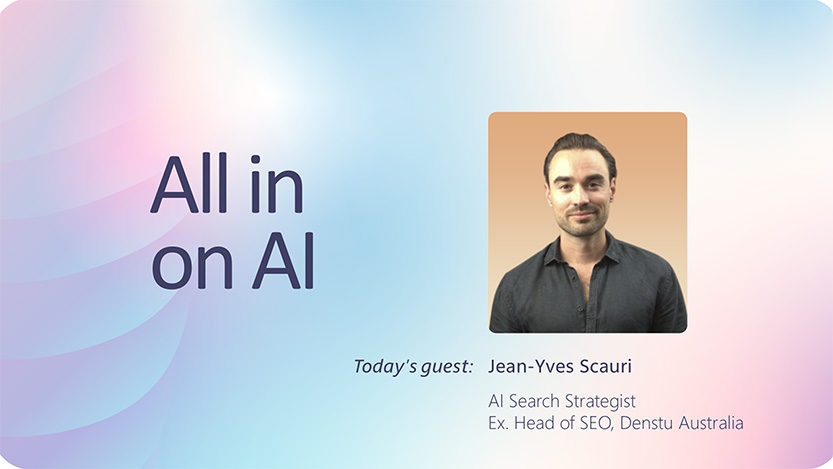
In Part 1, we explored how AI is reshaping discovery and why influence, not rankings, is becoming the new currency.
In this second instalment, we turn to execution: how brands should rethink content strategy, architecture, and measurement to ensure AI systems can understand, trust, and recommend them at scale.
What mindset shift do teams need to make to move from creating content for humans to creating content that machines can interpret, trust, and reuse?
The key mindset shift is realising you’re no longer just publishing content to rank pages or drive clicks. You’re actively shaping how AI systems understand your brand and your category.
For years we wrote almost exclusively for human readers. Now machines are a significant part of the audience too. Data from Cloudflare shows that automated traffic already represents a substantial share of global web activity, and in some contexts rivals human traffic.
In practical terms, machines are already “reading” your content at scale.
They don’t care how clever or well written something is if they can’t clearly extract what it means, what it relates to, and whether it can be trusted.
This isn’t about choosing between humans and machines. It’s about writing for humans while structuring information so machines can interpret, validate, and reuse it.
Teams that understand how AI systems retrieve information, evaluate credibility, and decide what to surface, and then design their content accordingly, will have a major advantage as AI-driven discovery grows.
As AI systems increasingly prioritise structured, dense, machine‑readable content, how should brands rethink their content architecture to avoid fragmentation and ensure AI can reliably understand and reuse their information?
Brands need to stop scaling content volume and start thinking about engineering relevance.
In practice, that means moving away from scattered pages and toward clear topic structures. Instead of having lots of disconnected articles, brands need to organise knowledge so depth, expertise, and context live together.
This also requires designing content so it still works when it is pulled out of its original context. AI systems often reuse information in isolation, so clarity matters more than ever. Clear sections, minimal fluff, concrete facts, and tightly focused explanations make it easier for AI to extract and apply information with confidence.
Structure plays a big role here too: consistent language, clear hierarchies, and well-defined relationships between ideas help AI understand how concepts fit together, rather than making it guess from fragmented information. Microsoft has shared practical guidance on this in its article Optimizing Your Content for Inclusion in AI Search Answers.
And just as important is reducing noise. Duplication, overlapping pages, vague catch-all content, and outdated information all weaken the system as a whole.
At its core, this is about building a connected knowledge system, not just growing a content library. When the structure is clear, AI can reliably understand and reuse a brand’s expertise at scale. When it’s fragmented, even great content gets diluted.
As AI begins to intermediate more of the customer journey what new metrics or signals do you think will define success for brands in a GEO‑first world? What tools are being used today and how are these helping you?
Measurement is a bit broken right now because we’re still using click and ranking-based metrics to evaluate an AI-driven world where content is retrieved, reasoned over, and often surfaced without generating visits at all. To make it harder, most AI platforms are not yet sharing meaningful performance data back with brands.
I also see teams spending a lot of time tracking individual prompts, even though that rarely reflects how people actually search or how AI systems behave at scale. Research from Ahrefs shows that AI answers change frequently, often with very short lifespans. In practice, many teams are measuring volatility rather than sustained visibility or influence.
A more useful shift is away from individual prompts and toward patterns of presence at a topic level. Tools like Profound and Peec.ai are helping brands understand how often and where they appear across AI answers, while newer platforms like Waikay are starting to model visibility trends rather than one-off outputs.
We are also starting to see early platform signals emerge. In February 2026, Bing Webmaster Tools introduced AI Performance reporting, giving brands their first direct signal of when content is cited across AI-driven experiences. While it does not yet include engagement metrics, it offers early visibility into how AI systems use content as sources.
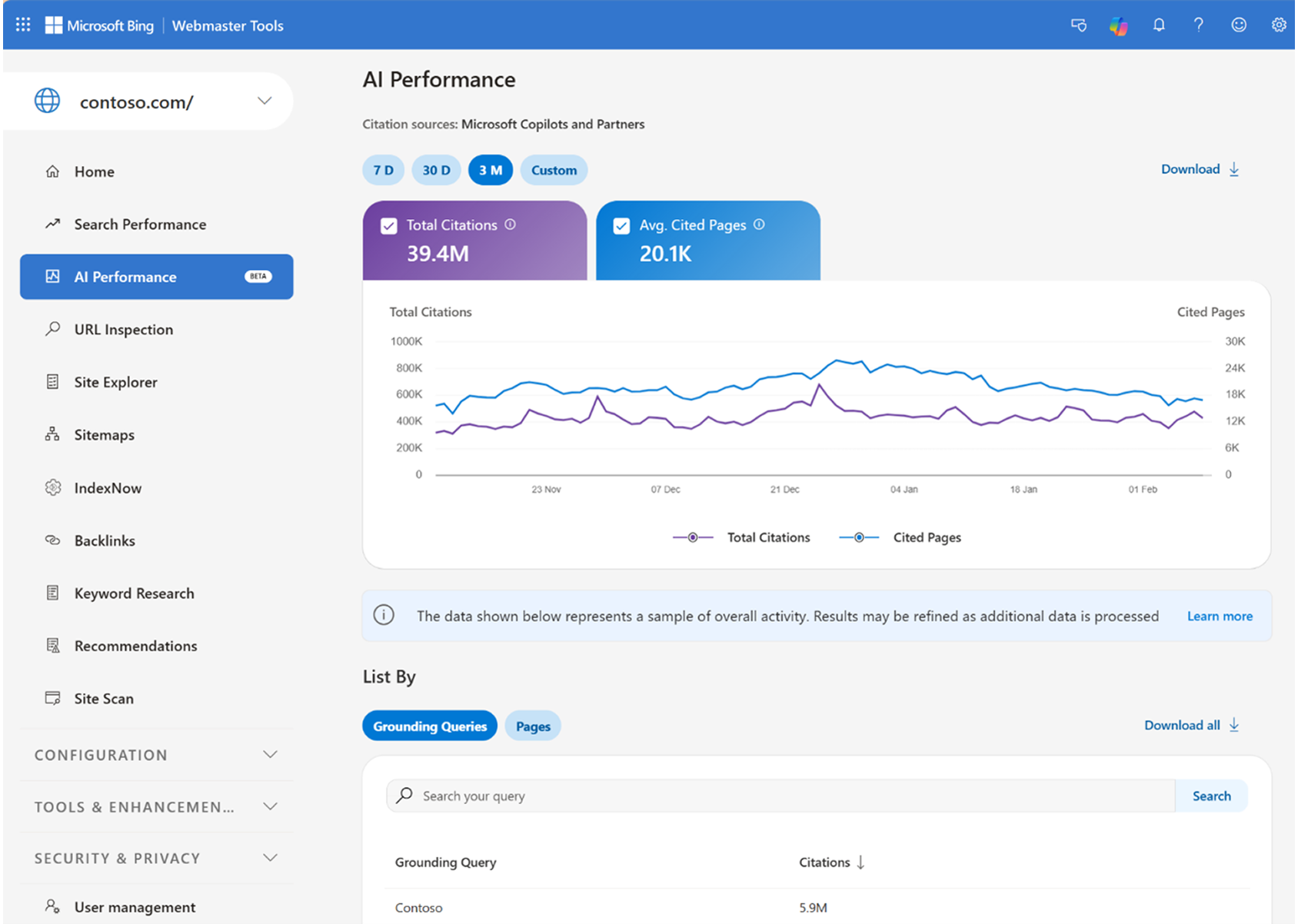
"In contrast, Google’s Search Console has introduced AI-powered tools to assist with analysis, but it does not yet show how content is cited or reused within AI answers. As a result, Microsoft is currently the only major platform giving brands a direct, measurable view of AI content usage."
In the absence of perfect data, success in a GEO-first world is increasingly inferred through proxy signals. These include:
- growth in branded and “brand + product” searches
- increases in direct and returning traffic, homepage visits
- assisted conversions where users re-enter via search
- evidence that AI systems are actively retrieving and using your content.
None of these metrics are perfect on their own. But together, they indicate whether AI systems can access your content, whether users are being influenced upstream, and whether that influence is translating into downstream demand.
The old KPI playbook of “rank, get clicks, convert” is no longer enough to explain visibility, trust, or influence in AI-driven discovery. Teams that adapt their measurement mindset early will be far better positioned as AI continues to intermediate the customer journey.
What’s one piece of advice you’d give to anyone beginning their journey into AI literacy, SEO, GEO, and AEO to stay relevant as AI becomes the primary interface for discovery and decision-making?
Stop chasing tactics and start understanding how AI systems actually works.
Most people are jumping straight into prompts, tools, and quick wins. The real advantage comes from understanding how AI retrieves information, how it evaluates credibility, and how it decides what to surface and recommend.
Once you understand those mechanics, SEO, GEO and AEO stop feeling like separate disciplines. They become one connected visibility problem across search engines, AI assistants, and agents.
Two resources were particularly helpful for me early on:
1. Andrej Karpathy’s YouTube talk The Busy Person’s Intro to LLMs (3.5m views), is one of the clearest explanations of how large language models retrieve information, reason over it, and generate responses.
2. The AI Search Manual by Michael King does a great job of connecting AI mechanics back to real-world search, content, and visibility strategy.
And importantly, don’t wait for perfect tools or perfect data. Start experimenting now. Audit how AI systems currently represent your brand and build from there. The learning curve itself becomes a competitive advantage as AI increasingly shapes discovery and decision-making.
Responses attributed to Adam Goodman, Director of AI in Advertising APAC:
As GEO becomes the new way people search and solve problems, I see Microsoft’s ecosystem giving brands the confidence to stay visible, relevant and efficient, without needing to rebuild their entire marketing approach. To help you on your GEO journey, be sure to access our latest guide, practical strategies and insights. You can access this and more at our brand new, AI Hub, The AI Web: The Race to Zero UI
Coming up next month in All In on AI: a conversation with a retail media expert on how AI is transforming the future of retail.

Your input makes us better
Take our quick 3-minute survey and help us transform your website experience.